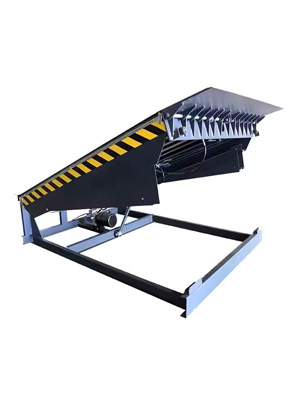
Loading docks serve as critical interfaces between transportation vehicles and indoor facilities, enabling efficient cargo handling across diverse sectors. Their design—from hydraulic levelers to safety barriers—varies significantly based on industry needs. Here’s an in-depth look at their typical applications:
Logistics and Warehousing: The Core Domain
In large logistics parks, loading docks act as the lifeline for warehouse operations. They bridge the gap between delivery trucks and storage areas, facilitating the rapid unloading of palletized goods or carton shipments. E-commerce fulfillment centers, such as those operated by JD.com or Amazon, integrate docks with automated conveyor systems to handle tens of thousands of packages daily. Third-party logistics (3PL) providers rely on standardized docks with adjustable levelers to accommodate trucks of varying heights, ensuring seamless cross-docking and inventory management.
Manufacturing: Fueling Production Cycles
In manufacturing plants, loading docks play a dual role in raw material intake and finished product output. Automotive factories use reinforced docks to receive steel coils and engine components, often equipped with weighing systems for precise material tracking. Food and beverage manufacturers require hygienic docks with sealed interfaces to prevent contamination during the loading of packaged goods. Heavy industry settings, like machinery plants, may install super-duty docks capable of supporting tons of equipment, sometimes with integrated rail systems for forklift access.
Retail and Commercial Distribution
Supermarket chains like Walmart and Yonghui operate regional distribution centers where docks handle hundreds of daily deliveries of groceries and perishables. These docks often feature temperature-controlled curtains to maintain freshness in produce sections. Chain restaurants’ central kitchens, such as those of McDonald’s or Haidilao, utilize cold-chain docks with insulated panels to receive frozen ingredients, ensuring temperature stability from delivery truck to cold storage.
Cold Chain and Specialized Sectors
Cold storage facilities demand docks with robust thermal insulation—typically polyurethane foam panels—to maintain temperatures between -18°C and +5°C. Pharmaceutical warehouses go a step further, adhering to GSP standards with disinfection systems like UV lights with in the loading dock areas to prevent drug contamination. For hazardous materials like chemicals or fireworks, docks incorporate explosion-proof designs, static grounding systems, and emergency spill containment to meet strict safety regulations.
Ports and Maritime Operations
Container terminals rely on massive shore-side docks (quay cranes) to load and unload shipping containers from cargo ships. These docks integrate with gantry cranes to handle tens of thousands of TEUs (twenty-foot equivalent units) daily. Bulk cargo docks, used for coal or ore, feature tipping platforms that empty materials directly into hoppers, connecting to conveyor networks for efficient storage. In inland waterways, smaller docks support river barge loading for regional cargo distribution.
Aviation and Air Cargo Handling
At cargo airports, loading docks (aircraft cargo bridges) interface with airplane cargo holds, using elevating platforms to align with different aircraft types. Facilities like SF Express’ Ezhou Huahu Airport hub combine docks with automated sorting systems to process air freight within hours. Passenger airports also use specialized docks for baggage handling, integrating with conveyor belts to ensure luggage reaches the correct aircraft compartment.
Agriculture and Food Processing
Farmers’ markets and produce wholesalers employ docks with built-in weighing scales for on-site trading of fruits, vegetables, and meats. Grain processing plants use docks with dust suppression systems to unload bulk crops like wheat or corn into silos. In seafood processing zones, docks are designed for easy hosing and sanitization, accommodating the high-volume unloading of catch from fishing vessels.
Construction and Municipal Services
Construction sites utilize temporary docks for vertical material transport, often paired with tower cranes to lift steel, concrete, or lumber to upper floors. Municipal waste treatment plants have docks with compactors to process garbage truck deliveries, while recycling centers use open-air docks for sorting recyclables from collection vehicles.
Specialized Applications
Military logistics employs portable docks for rapid deployment in field operations, designed to withstand harsh environments. Research laboratories handling sensitive equipment require vibration-dampened docks to protect delicate instruments during unloading. Even cruise ships use internal docks to transfer supplies between cargo holds, ensuring continuous operations at sea.
The Evolution of Loading Docks
Modern docks are increasingly integrating smart technologies: IoT sensors monitor dock usage and maintenance needs, while AI-driven systems optimize dock scheduling in busy hubs. Green innovations like solar-powered lighting and energy-efficient hydraulic systems are also becoming standard, reflecting industry shifts toward sustainability.
In essence, loading docks are not just functional structures but strategic assets that underpin supply chain efficiency. Their design—whether for a frozen food distributor or a high-tech manufacturing plant—directly impacts operational speed, safety, and cost-effectiveness, making them indispensable across nearly every goods-driven industry.