


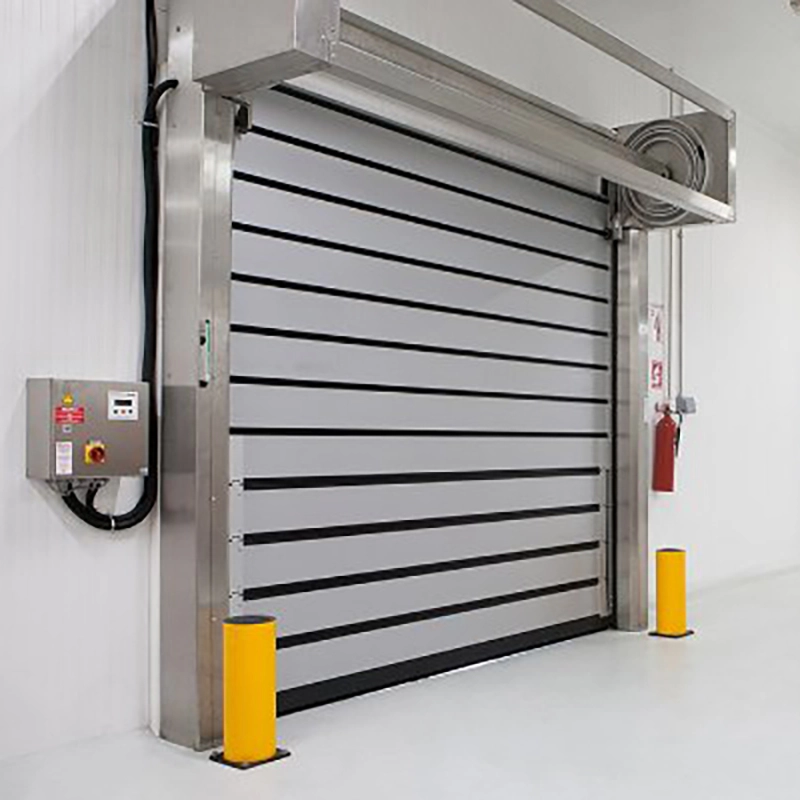
1. Safety Sensor Upgrades
- Install high-precision photoelectric sensors (e.g., infrared beams or microwave sensors) around the door frame to detect obstacles in real-time.
- Integrate edge safety sensors (e.g., pressure-sensitive rubber edges) on the door panel. These sensors trigger an immediate stop and reverse motion if physical contact occurs during closing.
- Use 3D vision sensors or laser scanners for complex environments to create a virtual safety zone, enhancing obstacle detection accuracy.
2. Emergency Stop and Control System
- Equip a prominent emergency stop button within easy reach, allowing quick shutdown in critical situations.
- Develop a smart control system with dual-circuit redundancy:
- Primary control circuit for normal operation.
- Secondary backup circuit (e.g., independent power supply) to ensure emergency stop functionality even during main system failures.
- Implement anti-drop protection mechanisms, such as electromagnetic brakes or mechanical limiters, to prevent sudden door collapse due to cable failure.
3. Structural Reinforcement and Material Safety
- Use anti-collision materials (e.g., impact-resistant aluminum alloys or composite panels) for door panels to reduce damage from accidental collisions.
- Design the door frame with shock-absorbing structures (e.g., elastic buffers) to minimize impact forces and protect both the door and surrounding personnel/equipment.
- Ensure all moving parts (e.g., motors, pulleys, chains) have protective casings to prevent accidental contact and entanglement.
4. Safety Testing and Regular Maintenance
- Conduct load-bearing tests and falling speed tests during installation to verify compliance with safety standards (e.g., EN 13241-1).
- Establish a routine maintenance schedule:
- Inspect sensor alignment and functionality monthly.
- Lubricate mechanical components quarterly to prevent wear and tear.
- Test emergency stop systems bi-annually to ensure reliability.
- Keep detailed records of maintenance and repairs for traceability.
5. Safety Training and User Guidelines
- Provide operation training for users, emphasizing proper use of control panels, emergency procedures, and hazard awareness.
- Display clear safety signage near the door, including warnings about prohibited actions (e.g., standing under the door during operation) and contact information for maintenance support.
- Develop a quick-reference manual outlining troubleshooting steps and safety protocols.
6. Compliance with Standards and Certification
- Ensure the hard rapid door meets international safety standards (e.g., OSHA in the U.S., CE marking in the EU).
- Obtain third-party certification for safety features (e.g., EN 12453 for automatic doors) to validate performance.
7. Remote Monitoring and Predictive Maintenance
- Integrate IoT-enabled sensors to monitor door performance in real time (e.g., motor temperature, opening/closing speed).
- Use predictive analytics to identify potential failures (e.g., worn cables, sensor drift) before they escalate into safety hazards, enabling proactive maintenance.
By combining advanced technology, robust structural design, regular maintenance, and user education, hard rapid doors can achieve high-level safety, minimizing risks of injury, equipment damage, and operational disruptions.
For relevant information: leo@fldoor.com.cn